Michael M. Schulreich

Astrophysicist

Reading the history of our cosmic neighborhood in atoms.

Photo: Wolf Lux

About

I am an astrophysicist studying the dynamics of the interstellar and intergalactic medium — above all the boundaries between hot, tenuous gas and cooler, denser material, from shock fronts to mixing layers. I follow these boundaries across scales: from the mid-infrared bubbles around young massive stars, through superbubbles such as the Local Bubble that surrounds the Sun, to Galaxy-scale outflows like the eROSITA and Fermi bubbles, and to high-velocity clouds and other obstacles moving through hot gas. My approach combines analytic theory, massively parallel high-resolution 3D (magneto)hydrodynamic simulations on supercomputers, and synthetic observables that can be tested directly against data.

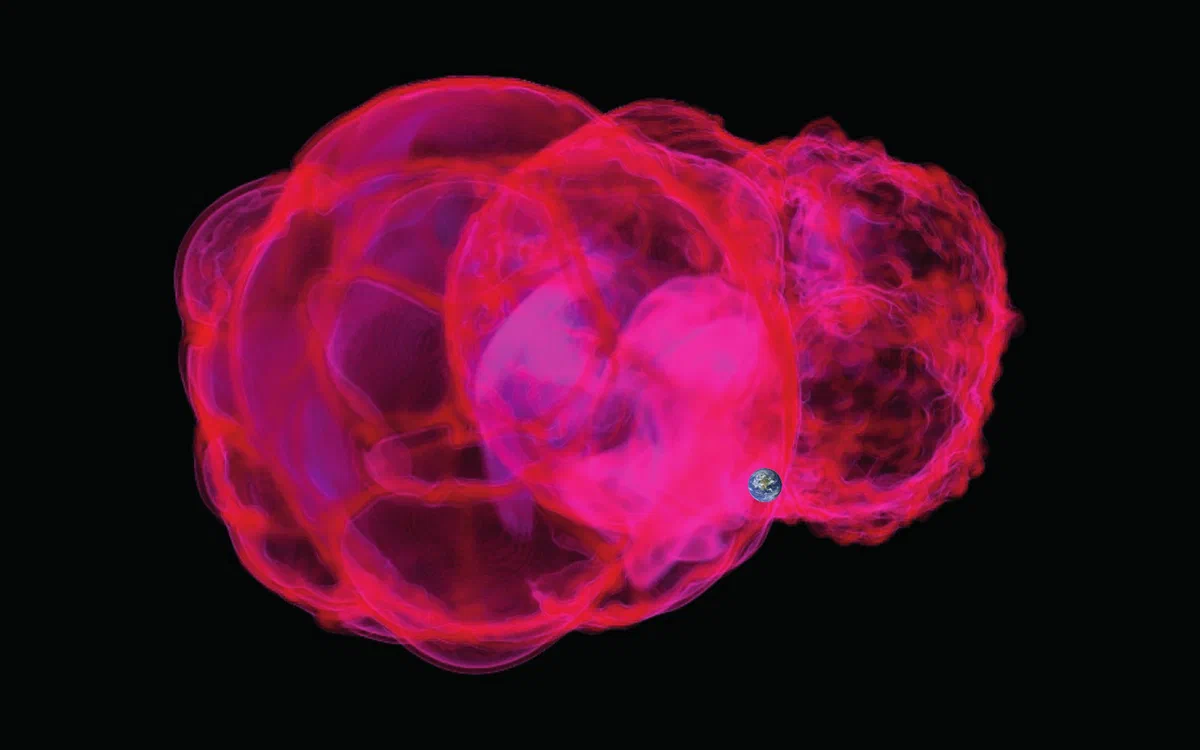
Close to home, the same physics lets us trace the supernovae that shaped our cosmic neighborhood through the radionuclides they left on Earth and the Moon — an emerging field known as supernova archaeology. At the Department of Astrophysics of the University of Vienna, I lead the FWF-funded project ORION (Origins of Radionuclides In Our Neighborhood), which combines 3D magnetohydrodynamic simulations of the Local Bubble and its neighboring superbubbles with supernova histories reconstructed from Gaia data of nearby young star clusters.

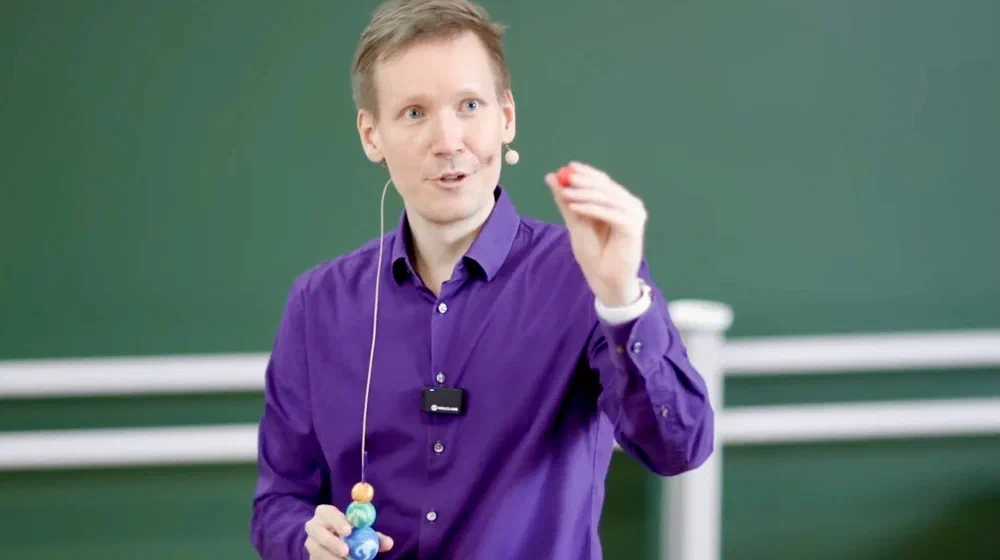
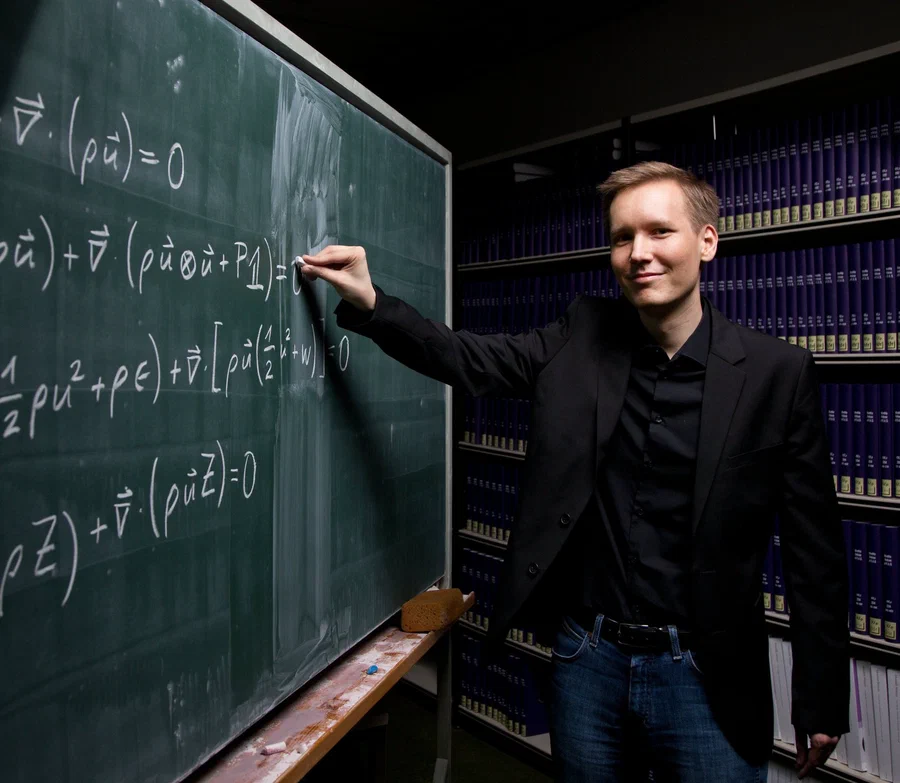
Michael M. Schulreich at a blackboard with the equations of hydrodynamics
Photo: Wolf Lux

Research interests

  • Interstellar & intergalactic medium
  • Bubbles & superbubbles
  • Supernova archaeology
  • Live radionuclides
  • Cosmic rays
  • Galactic outflows
  • High-velocity clouds
  • Shocks & instabilities
  • Turbulence
  • Thermal conduction & mixing
  • 3D (M)HD simulations
  • Analytic modeling

Software & tools

Simulation codes
RAMSES · MPI-AMRVAC · FLASH · VH-1
Programming & parallel computing
Python · Fortran · C · MPI · OpenMP · OpenACC
Analysis & data
yt · ParaView · VisIt · VAPOR · TOPCAT · ADQL · astroquery

Positions

Senior Postdoctoral Researcher / Project Leader

University of Vienna, Austria

Department of Astrophysics

Guest Researcher

Technische Universität Berlin, Germany

Institut für Physik und Astronomie

Postdoctoral Researcher and Lecturer

Technische Universität Berlin, Germany

Zentrum für Astronomie und Astrophysik

Research Assistant

Technische Universität Berlin, Germany

Zentrum für Astronomie und Astrophysik

Education

PhD in Physics

Technische Universität Berlin, Germany

MSc in Astronomy

University of Vienna, Austria

BSc in Astronomy

University of Vienna, Austria

Thesis: About interstellar magnetic fields, their properties and their formation through the Galactic dynamo

with distinction

Selected publications

Astronomy & Astrophysics · 2026

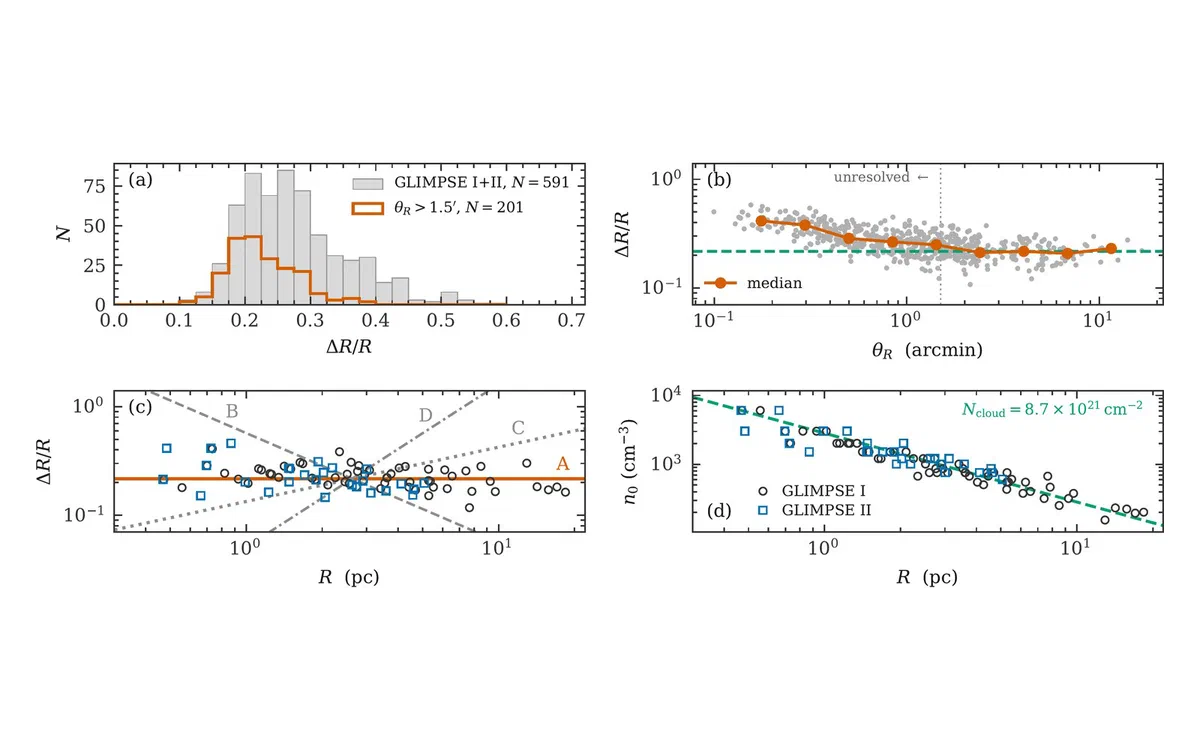
The universal thickness of mid-infrared bubbles

M. M. Schulreich, A. B. C. Patzer

Hundreds of mid-infrared bubbles share the same relative shell thickness regardless of size. We show analytically that this is not a sign of swept-up shells: the 8 µm ring is the far-UV-heated photon-dominated region, so its relative width is set by the ratio of two nearly constant dust columns — explaining the universal ΔR/R ≈ 0.22 found in the GLIMPSE catalogs.
Monthly Notices of the Royal Astronomical Society · 2026

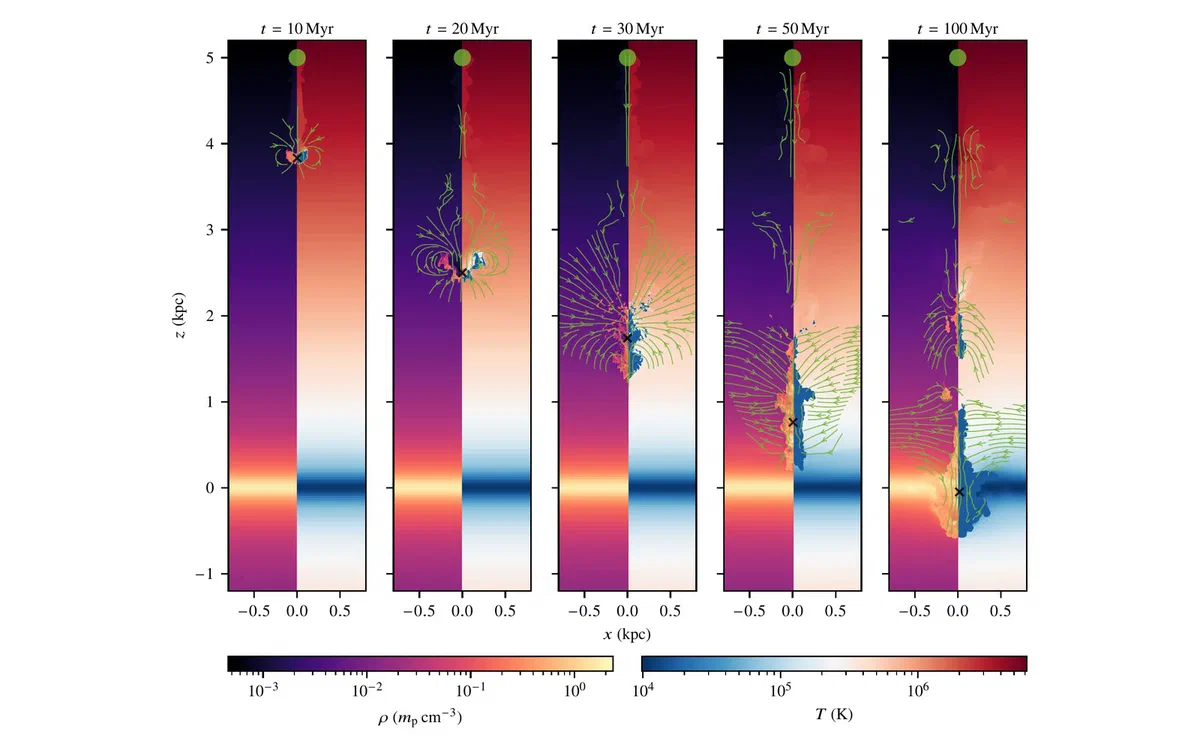
Gas accretion onto the Milky Way: high-velocity cloud survival and the revival of the terminal-velocity paradigm

M. M. Schulreich, D. Breitschwerdt, J. Kerp

Are clouds falling onto the Milky Way really moving at terminal velocity? Combining analytic equations of motion with 3D simulations in a stratified halo, we find that dense clouds stay nearly ballistic for most of their fall; only radiative cooling, which lets them gain mass from the hot halo, restores terminal-velocity-like motion — with direct consequences for distance estimates.

Astronomy & Astrophysics · 2025

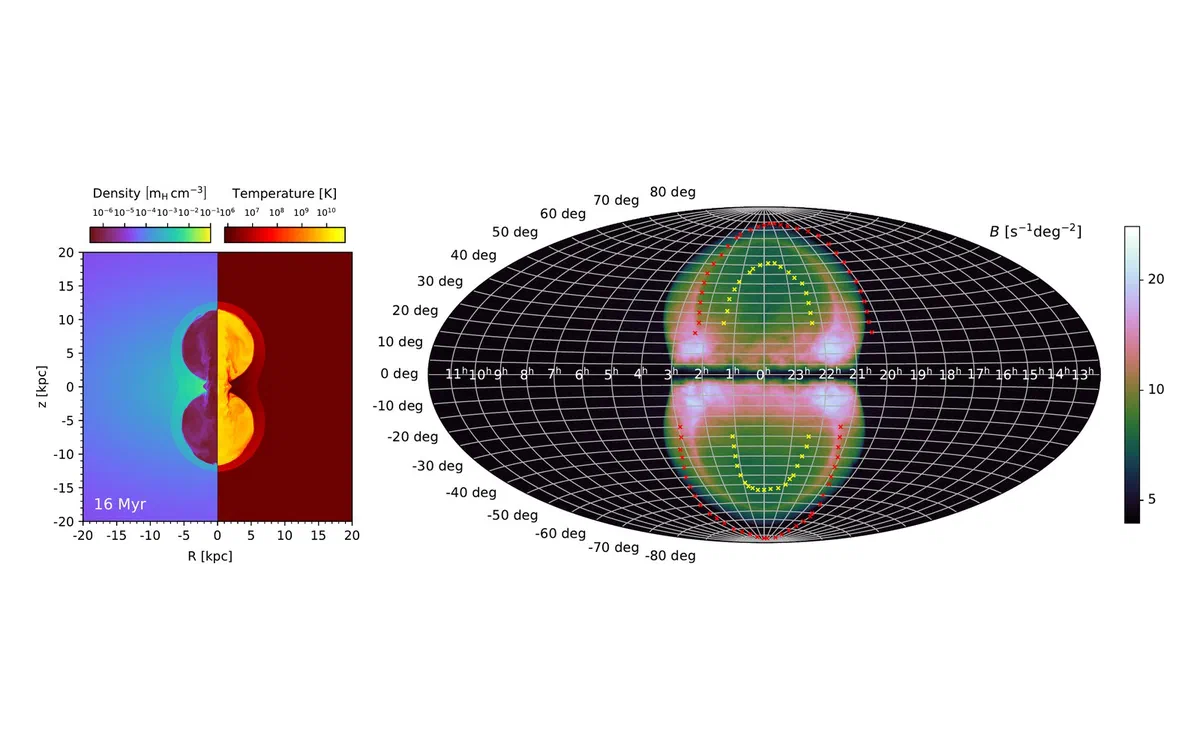
Tidal disruption events as the origin of the eROSITA and Fermi bubbles

T. Scheffler, M. M. Schulreich, D. P. P. R. Schurer, et al.

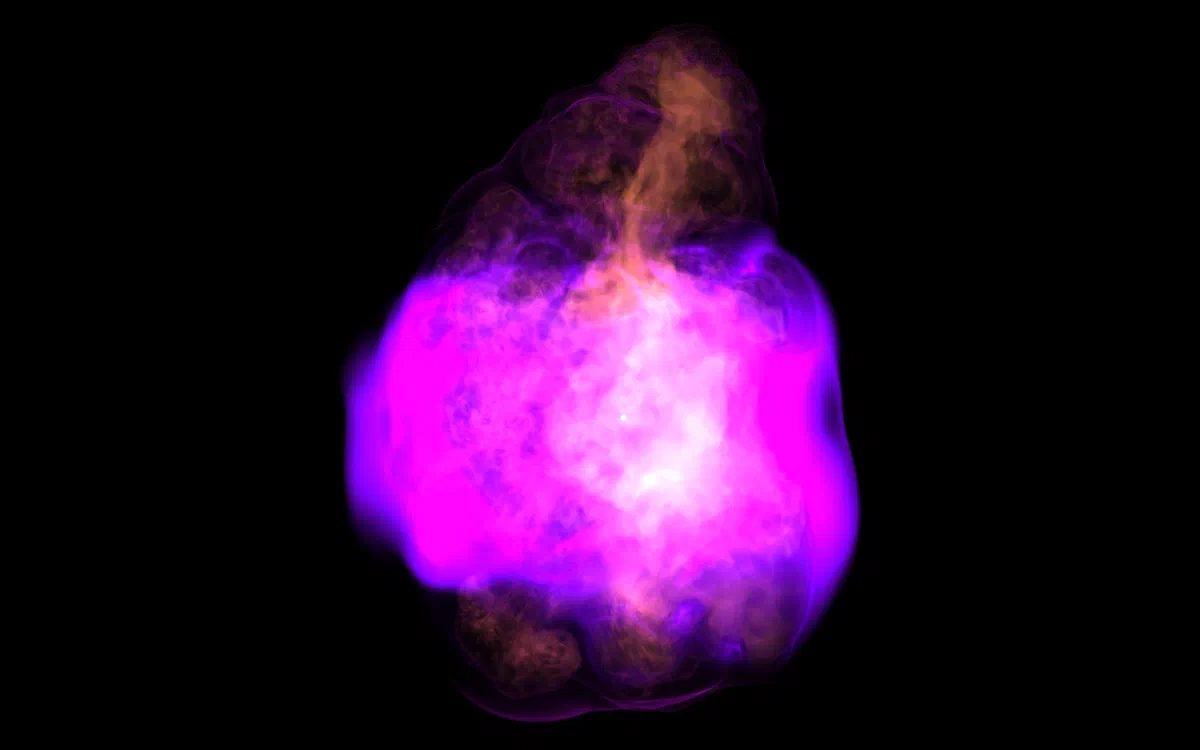
Could the giant X-ray and gamma-ray bubbles above and below the Galactic Center be inflated by stars torn apart by Sgr A*? 3D simulations show that recurring tidal disruption events, roughly every 100 kyr over about 16 Myr, produce bubbles with the size, shape, and shell stability of the eROSITA bubbles.

Astronomy & Astrophysics · 2024

Gamma-ray line emission from the Local Bubble

T. Siegert, M. M. Schulreich, N. Bauer, et al.

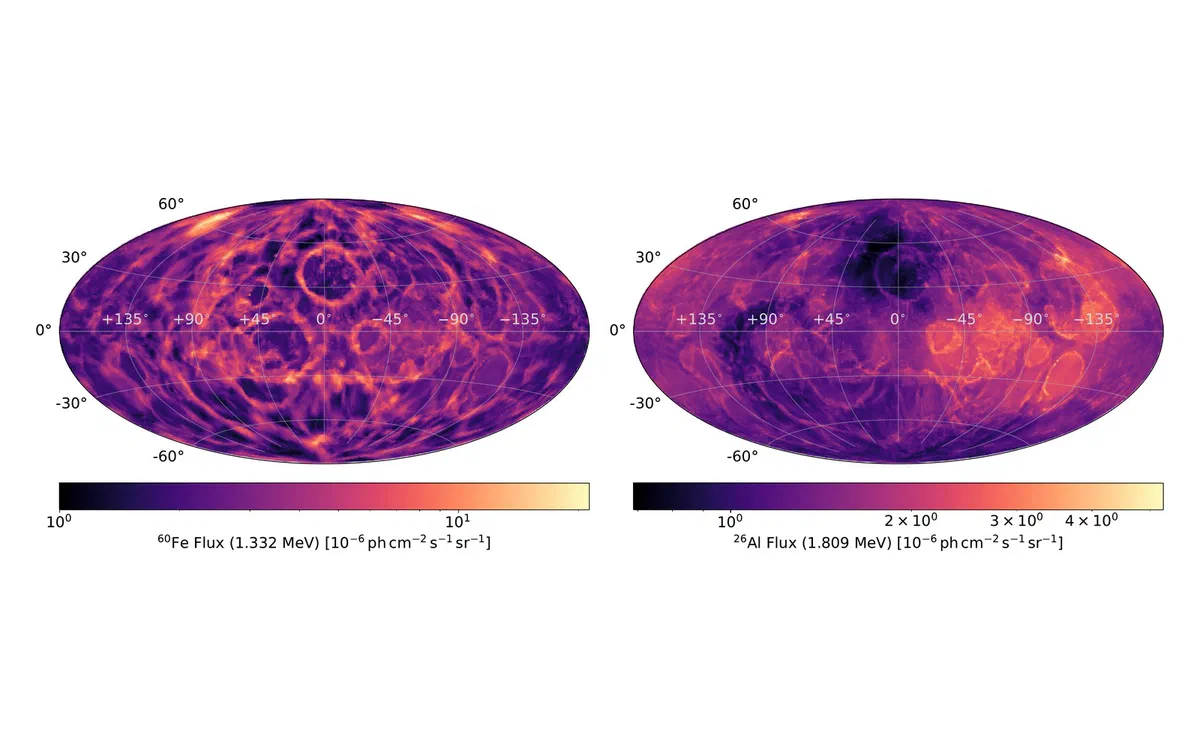
The supernovae that created the Local Bubble should still glow in the gamma-ray lines of decaying 26Al and 60Fe. We predict these foreground fluxes, show that they are within reach of the upcoming COSI mission, and find that the two isotopes need not be distributed in the same places — contrary to a common assumption in data analysis.

Astronomy & Astrophysics · 2023

Numerical studies on the link between radioisotopic signatures on Earth and the formation of the Local Bubble. II. Advanced modelling of interstellar 26Al, 53Mn, 60Fe, and 244Pu influxes as traces of past supernova activity in the solar neighbourhood

M. M. Schulreich, J. Feige, D. Breitschwerdt

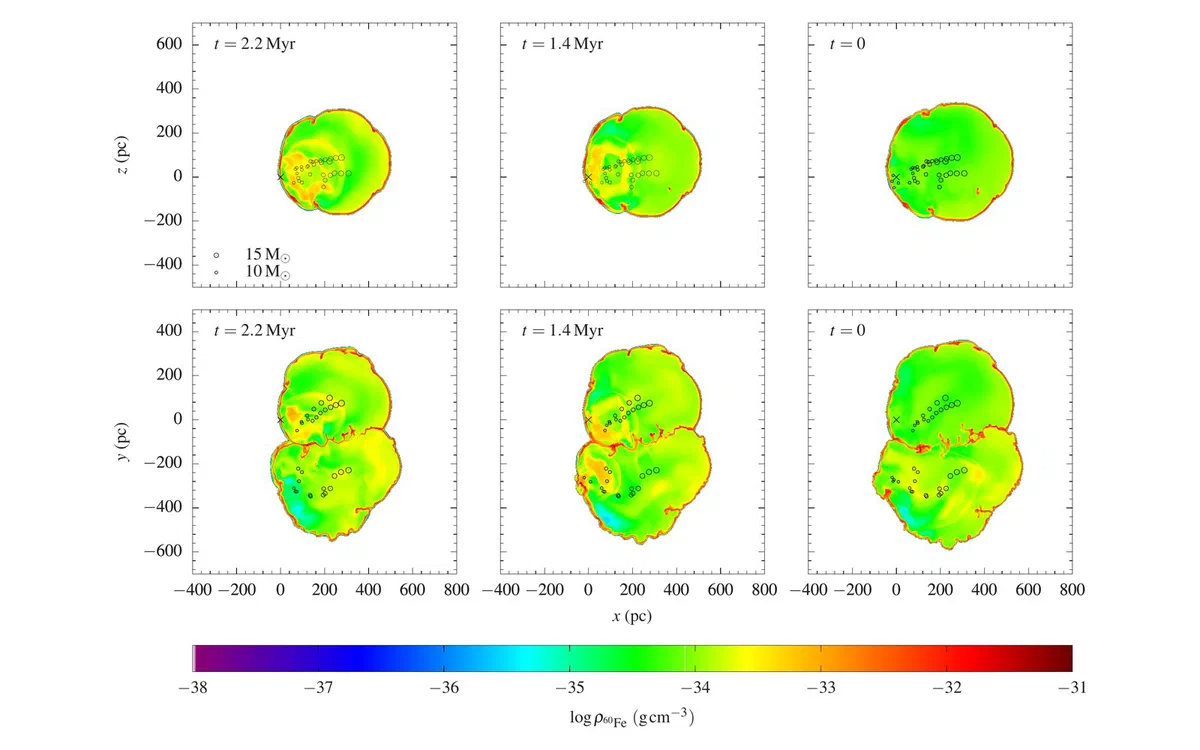
Using Gaia to reconstruct 14 supernovae from the Scorpius–Centaurus association, we simulate the formation of the Local Bubble in 3D and follow 26Al, 53Mn, 60Fe, and 244Pu all the way to Earth. The model reproduces the bubble’s shape and the young 60Fe signal, and confirms that the Sun entered the bubble about 5 Myr ago.

Monthly Notices of the Royal Astronomical Society · 2022

The time-dependent Rayleigh-Taylor instability in interstellar shells and supershells, including the eROSITA bubbles

M. M. Schulreich, D. Breitschwerdt

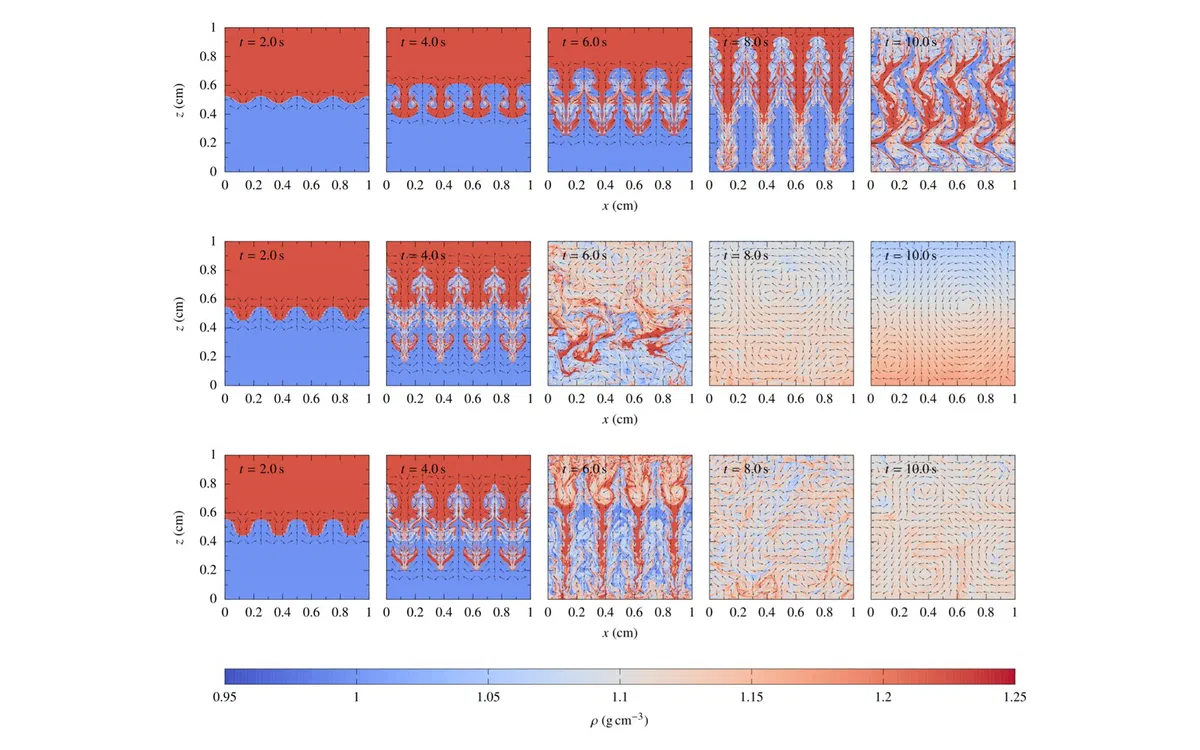
Expanding shells around stars, supernova remnants, and superbubbles decelerate in strongly stratified surroundings, where classical instability theory fails. We derive analytic growth criteria for time-dependent acceleration, verify them with simulations, and apply them to show that the eROSITA bubbles’ smooth rims constrain how they formed.

Astronomy & Astrophysics · 2017

Numerical studies on the link between radioisotopic signatures on Earth and the formation of the Local Bubble. I. 60Fe transport to the solar system by turbulent mixing of ejecta from nearby supernovae into a locally homogeneous interstellar medium

M. M. Schulreich, D. Breitschwerdt, J. Feige, et al.

The first 3D simulations to follow 60Fe from individual supernovae in nearby moving groups through the growing Local Bubble to Earth. They reproduce both timing and strength of the deep-sea 60Fe signal — provided the surrounding gas is no denser than about 0.3 cm−3.

Nature · 2016

The locations of recent supernovae near the Sun from modelling 60Fe transport

D. Breitschwerdt, J. Feige, M. M. Schulreich, et al.

The Local Bubble was blown by 14–20 supernovae in a moving group whose surviving stars now belong to the Scorpius–Centaurus association. By reconstructing the progenitors’ trajectories and masses, we located the explosions in space and time and showed with 60Fe transport models that the deep-sea signal comes mainly from two supernovae 90–100 pc away, about 2.3 and 1.5 Myr ago.

Astronomy & Astrophysics · 2011

Astrophysical bow shocks: an analytical solution for the hypersonic blunt body problem in the intergalactic medium

M. M. Schulreich, D. Breitschwerdt

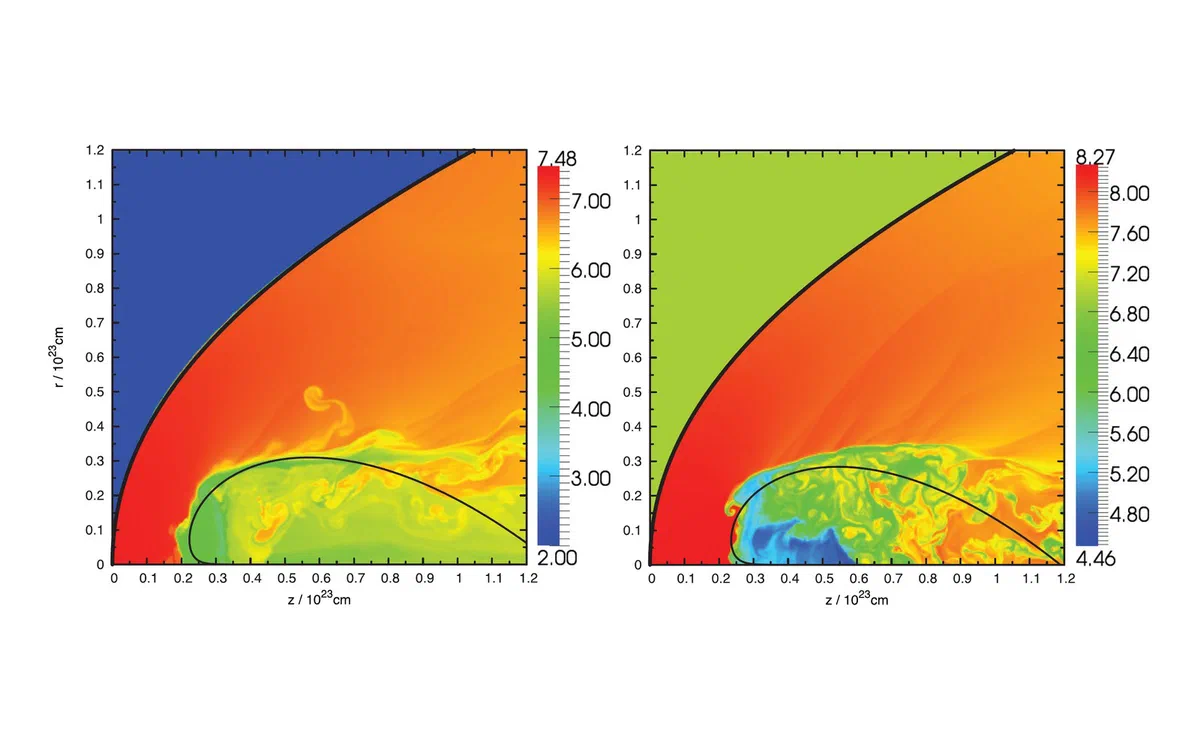
Galaxies moving supersonically through cluster gas drive bow shocks. We adapt an aeronautical inverse method that predicts the full post-shock flow and the obstacle’s shape from the shock geometry alone, and validate it against hydrodynamic simulations — a fast tool for any astrophysical bow shock.

All publications

Projects

FWF Principal Investigator Project · University of Vienna · 2027–2031

ORION

Origins of Radionuclides In Our Neighborhood

Which supernovae shaped the Sun’s cosmic neighborhood — the Local Bubble and the superbubbles around it — and when did their debris reach the Earth? ORION combines 3D magnetohydrodynamic simulations of interacting superbubbles with supernova histories reconstructed from Gaia data of nearby young star clusters to explain the live radionuclides found on Earth and the Moon.

Project page

Funded byFWF – Austrian Science Fund

Recent & upcoming talks

  • May 2027 Upcoming

    TBD

    Workshop “The Galactic Journey of the Solar System: Astronomical, Geological, and Paleo-Climatological Perspectives”

    Garching, Germany Invited

  • Mar 6, 2025

    The supernova link between the Local Bubble and deep-sea radioisotopes

    DAWN Cake Talks

    Copenhagen, Denmark Invited

  • Jul 5, 2024

    The radioisotopic imprint of the Local Superbubble on the Earth and beyond

    European Astronomical Society Annual Meeting (EAS 2024)

    Padova, Italy Contributed

  • Mar 7, 2024

    The supernova link between the Local Bubble and deep-sea radioisotopes

    19th Russbach School on Nuclear Astrophysics

    Russbach, Austria Contributed

  • Oct 18, 2023

    The supernova link between the Local Bubble and deep-sea radioisotopes

    Online seminar of IAU Commission H1 “The Local Universe”

    Online Invited Video

All talks

Teaching

Graduate-level lectures, lab courses, and seminars at TU/FU Berlin, and supervision of Bachelor’s, Master’s, and PhD theses.

Courses 5 · 22 terms

Lecture · TU/FU Berlin

Astrophysical Fluid Mechanics

Summer 2025 · Summer 2024 · Winter 2019/20 · Summer 2017

Summer 2025 with M. Pacicco

Lecture · TU/FU Berlin

Physics of the Interstellar and Intergalactic Medium

Summer 2024 · Winter 2019/20

Lab course · TU/FU Berlin

Numerical Methods in Astrophysics

Winter 2024/25 · Winter 2023/24 · Summer 2023 · Winter 2022/23 · Summer 2022 · Winter 2021/22 · Summer 2021 · Winter 2020/21 · Summer 2020 · Summer 2019

Lecture series · TU Berlin

Topical Methods in Physical Research

Winter 2024/25 · Winter 2023/24 · Winter 2022/23 · Winter 2021/22 · Winter 2020/21

One lecture per term

Seminar · TU/FU Berlin

The Cosmic Matter Cycle — Current Research Topics

Winter 2022/23 · Winter 2021/22 · Winter 2020/21 · Summer 2020 · Summer 2019 · Summer 2018 · Summer 2017 · Winter 2011/12 · Summer 2011

with D. Breitschwerdt

Earlier seminar topics (TU/FU Berlin, 2009–2012, with D. Breitschwerdt): High-Energy Astrophysics · Dark Energy — The Dark Side of the Universe · Star Formation · Galaxy Evolution · Radiation Processes in Physics and Astronomy

Supervision 9

Bachelor's theses · 4

  • David P. P. R. Schurer (TU Berlin, 2024)
    X-ray maps from hydrodynamic simulations on the origin of the eROSITA bubbles
  • Sebastian Wullrich (FU Berlin, 2021)
    Numerical calculations of superbubbles according to Kompaneets’ approximation
  • Jakob Neef (FU Berlin, 2019)
    Hydromagnetic astrophysical bow shocks
  • Philip Knospe (TU Berlin, 2019)
    Analytical solutions of the blunt body problem in the context of stellar bow shocks

Master's theses · 4

  • Emre Elmalı (TU Berlin, 2026)
    Kinematic analysis of star clusters in search of past supernovae in the neighbouring Orion-Eridanus superbubble
  • Tassilo Scheffler (FU Berlin, 2023)
    Hydrodynamical simulations on the origin and evolution of the eROSITA bubbles
  • Frederik Berberich (HU Berlin, 2021)
    Numerical studies on the magnetic field structure in the vicinity of superbubbles and the impact of the magnetic field on their dynamical evolution
  • Consuelo L. Guzman (Leipzig University, 2019)
    Analytical studies of the interaction of high-velocity clouds with the ambient galactic halo gas

PhD theses · 1

  • Mattia Pacicco (TU Berlin, since 2023)
    MHD simulations of supernova remnants and superbubbles (working title)

Academic service

Conference organization

Peer review

Referee for The Astrophysical Journal, Astronomy & Astrophysics, Monthly Notices of the Royal Astronomical Society, and Astrophysics and Space Science (since 2018).

Memberships

Member of the International Astronomical Union (IAU, since 2022), the European Astronomical Society (EAS, since 2019), and the Astronomische Gesellschaft (AG, since 2008).

Outreach

Sharing how the cosmos around us works — and how we can read its history in atoms on Earth — is part of my work.
Michael M. Schulreich explaining the core-collapse supernova explosion mechanism with a toy during a public lecture
  • Current

    Planetarium show Encounters in the Milky Way

    Scientific consulting and quantitative modeling for the fulldome space show at the Hayden Planetarium of the American Museum of Natural History, New York, whose Local Bubble segment is based on my simulations.

  • 2024

    Public talks

    Long Night of Science, Berlin (Jun 22) · 37th University Days of Physics — New Findings in Astronomy, Marburg (Feb 15–16)

  • 2009–2025

    Outreach at TU Berlin

    Long Nights of Science, Girls’ Days, information days for school students, and career fairs; responsible for public inquiries at the Zentrum für Astronomie und Astrophysik (2016–2025).

Watch

Local Bubble formation sequence from Encounters in the Milky Way

Hayden Planetarium space show · © American Museum of Natural History

Wir leben in einer Blase – Geheimnisse des kosmischen Staubs

Public lecture (German) · Urknall, Weltall und das Leben · 2024

Open on YouTube

The supernova link between the Local Bubble and deep-sea radioisotopes

Invited seminar · IAU Commission H1 “The Local Universe” · 2023

Open on YouTube

Contact

Questions about my research, collaborations, or the ORION project are welcome.

Show e-mail address

Department of Astrophysics
University of Vienna
Türkenschanzstraße 17
1180 Vienna, Austria